

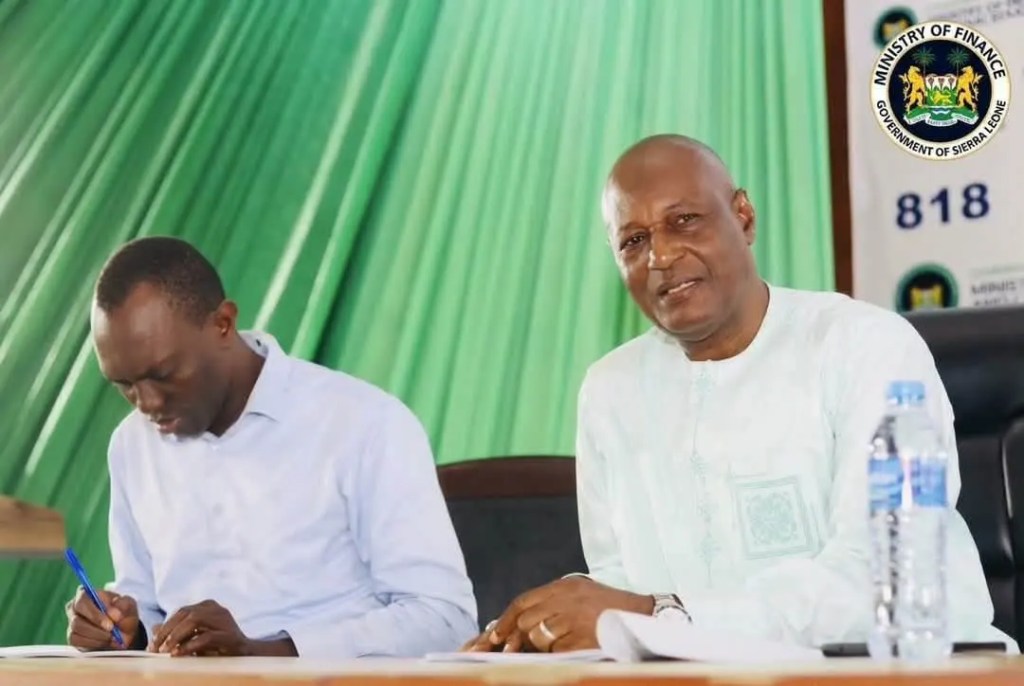
Sierra Leone’s Ministry of Finance has laid out an ambitious fiscal agenda for 2027, aiming to raise domestic revenue, shrink the country’s debt burden and tighten public spending controls as the government works to steady the economy against a recent spike in global oil prices.
The ministry presented its FY2027 budget agenda during Bilateral Budget Hearings held in Freetown on October 1, where officials set out targets for the next fiscal year: growing domestic revenue from 10.7 percent of GDP, or roughly NLe18 billion, in 2025 to 12.3 percent of GDP, about NLe25.99 billion, by 2027. The government also wants to bring the country’s debt-to-GDP ratio down from 49.3 percent to 43.5 percent over the same period, and to cut the fiscal deficit from 4.4 percent of GDP to below 3 percent by 2027. Economic growth is projected at 3 to 4 percent annually.
For the current fiscal year, the ministry was allocated NLe269.3 million, of which NLe188.5 million had been spent by the end of September. For FY2027, the ministry is requesting NLe232.69 million to carry out its revenue, debt-management and expenditure-control objectives.
Financial Secretary Matthew Dingie described the bilateral hearings as central to accountability in how public money is allocated, calling the process “a key mechanism for promoting transparency and public understanding of how government resources are allocated and managed.”
Deputy Minister of Finance Kadiatu Allie encouraged stakeholders attending the hearings to engage closely with the numbers, noting that the ministry was putting forward its own budget “for public assessment.” Acting Director Alhaji Abu Komeh walked participants through the ministry’s strategic objectives, which center on raising revenue collection, managing down the public debt stock and reinforcing controls on government expenditure.
The agenda comes as Sierra Leone contends with external shocks, including Middle East tensions and volatility in petroleum prices, that have put pressure on the budget this year and prompted the government to revisit its fiscal assumptions. Officials have acknowledged that global headwinds make the revenue and debt targets more difficult to hit, even as they argue the targets remain achievable with disciplined implementation.
The FY2027 proposals will now move through further budget hearings and parliamentary scrutiny before the government finalizes next year’s spending plan. If the targets hold, they would mark a meaningful shift in Sierra Leone’s fiscal position, with the Ministry of Finance betting that stronger domestic revenue collection and tighter debt management can offset the pressure from volatile global oil markets and help steer the country toward lower deficits ahead of the 2027 budget cycle.
Sources: Premier News SL, Awoko Newspaper SL




Leave a comment