

Sierra Leone’s drive to redraw its local government map moved into a more detailed planning phase this week, as senior officials used back-to-back government press briefings in Freetown to lay out how new localities and councils would be funded, staffed and governed once created.
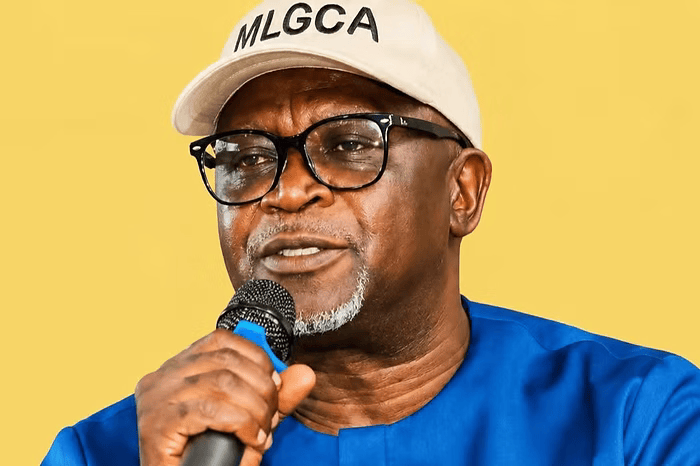
At the Ministry of Information and Civic Education’s Weekly Press Briefing on Tuesday at the Miatta Civic Centre, Minister of Local Government and Community Affairs Tamba Lamina explained that the creation of new localities is meant to strengthen local governance, improve service delivery and respond to population growth and shifting geographic needs. He said the process is governed by the Local Government Act of 2004 and its 2022 amendment, and requires consultation and coordination across government institutions, with factors such as population size, administrative boundaries and community capacity all weighed before any locality is approved. He stressed that new localities would need adequate staffing, funding, infrastructure and clearly defined responsibilities before they could function effectively.
Brima Newman Combey, Director of Local Government at the Ministry, told the same briefing that proposals for new localities require careful assessment and community engagement, pointing to areas including Mambala, Black Johnson, John Obey and Leicester as places whose development potential and local characteristics are under review. He cautioned that redistricting is not intended to divide communities, urging residents to preserve unity and peaceful coexistence, and warned specifically against allowing the process to harden into tribal or ethnic division, particularly among younger people. He acknowledged that proposals can attract differing opinions and political considerations, making consultation and accurate public information essential.
The following day, Alex Bhonapha, Director of the Decentralization Secretariat, focused the briefing on how new local councils would actually be paid for. He said councils need reliable revenue streams, including internally generated income such as property rates and licence fees, alongside central government grants and support from development partners, among them the European Union. Bhonapha added that funding alone would not be enough without sound planning, coordination and financial management, and said new localities would also need suitable administrative centres, facilities, trained staff and institutional capacity before they could be stood up. He called for closer coordination between the Ministry of Local Government and Community Affairs, the Decentralization Secretariat and other state institutions as preparations continue.
The briefings build on a decentralization push that has been under consultation for roughly a year, including plans floated by the Ministry for Freetown’s Western Urban District to be reorganised into three localities while the city retains its status as the capital, alongside proposals for new districts carved from parts of Bo, Pujehun, Kailahun and Kenema, and for Lungi to be elevated to city status. Officials have said any final recommendations would go to President Julius Maada Bio before implementation, and that existing local council leadership would not be affected in the interim.
With nationwide consultations ongoing, the government has signalled that the pace of reform will depend on how quickly funding, staffing and administrative questions can be resolved alongside the political sensitivities that come with redrawing boundaries.
Sources: Ministry of Information and Civic Education (moice.gov.sl); Ministry of Local Government and Rural Development (mlgrd.gov.sl)

Leave a Reply