

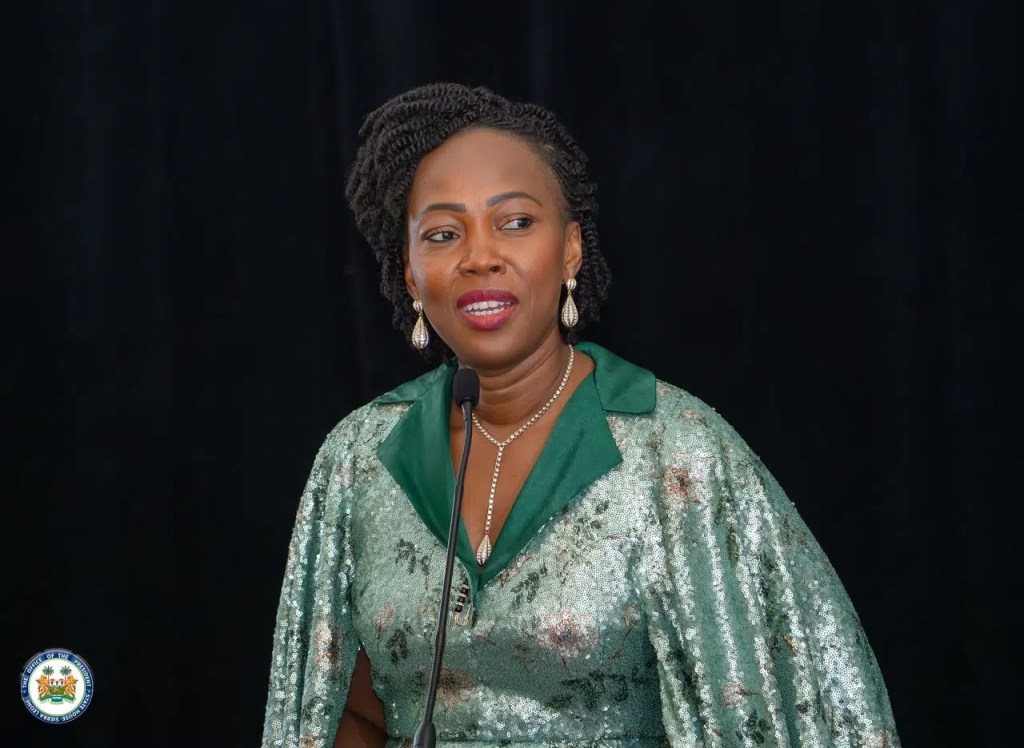
President Julius Maada Bio has pledged three new government commitments to end child, early and forced marriage in Sierra Leone, speaking at a high-level United Nations event in New York that celebrated a Sierra Leone-sponsored resolution establishing November 27 as the International Day for the Elimination of Child, Early and Forced Marriage.
The resolution, adopted by consensus at the UN General Assembly on September 4, 2026, was sponsored by Sierra Leone and co-sponsored by 84 other member states. Addressing the gathering on September 23, President Bio framed the vote as proof that the issue could unite a deeply divided world body. “At a time of deep global division, every Member State agreed that no girl should lose her childhood, education or future through marriage,” he said.
Building on the resolution, Bio announced that his government will develop a comprehensive National Action Plan to eliminate child, early and forced marriage, strengthen enforcement of the existing Prohibition of Child Marriage Act through improved registration, education and community engagement, and begin annual progress reporting starting November 27, 2026, to share lessons with other countries working on the same problem.
The President linked the policy to Sierra Leone’s own development prospects, arguing that early marriage carries a lasting economic and social cost. “A country that allows its daughters to be married too early pays the price for generations,” he said, adding that the success of the new measures “will be measured by the number of children protected from early marriage, kept in school.”
The announcement drew on figures cited at the UN showing that more than 640 million girls and women alive today were married as children, with millions more married before adulthood each year globally. Sierra Leone has in recent years positioned itself as a regional advocate on the issue, including through First Lady Fatima Bio’s long-running campaign against child marriage and gender-based violence, which the President credited for helping build momentum behind the UN resolution.
The push comes as Sierra Leone continues to lean on international diplomacy as a pillar of its foreign policy under Bio, who also met UN Secretary-General António Guterres in New York during the same visit. Guterres praised Sierra Leone’s record on the Security Council during its 2024-2025 tenure and reaffirmed support for greater African representation in global institutions, while Bio used the meeting to flag Sierra Leone’s plans to host a West Africa Integration and Investment Summit in Lungi in November 2026.
For a country where UNICEF and local campaigners have long flagged child marriage rates as among the highest in West Africa, the new reporting requirement sets a concrete, time-bound benchmark that advocacy groups are likely to hold the government against in the coming years. Whether the Prohibition of Child Marriage Act’s enforcement gaps — chronically underfunded registration and weak rural enforcement, according to civil-society groups — can be closed quickly enough to show measurable results by the time Sierra Leone files its first annual report this November remains an open question.
The government has not yet released a timeline for publishing the National Action Plan itself, and officials at the Ministry of Gender and Children’s Affairs have not detailed how the new enforcement and education measures will be funded.
Sources: Office of the President of Sierra Leone (statehouse.gov.sl)



Leave a comment