

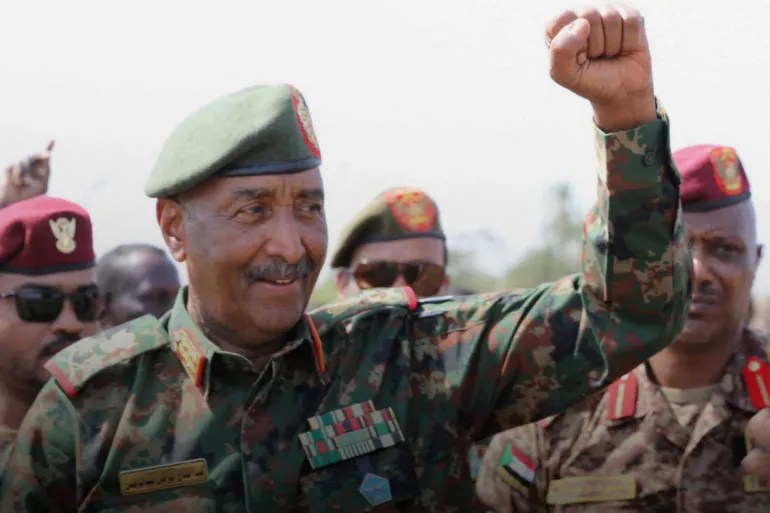
Sudan’s military said this week it has seized al-Mazroub, a town in North Kordofan state described as the Rapid Support Forces’ largest stronghold in the region, in what the army is calling a major shift in momentum after more than three and a half years of civil war.
Mohamed Deidan, a spokesman for the Sudanese army’s special forces, said the Sudanese Armed Forces “has taken full control of al-Mazroub after battles with the Rapid Support Forces,” calling the capture “a major turning point in the fighting in the Kordofan region.” Deidan told the Anadolu news agency that taking the town also advanced the army’s broader goal of “cutting the RSF’s supply lines,” since al-Mazroub sits on a key route linking North and West Kordofan.
The town’s capture matters because Kordofan has become the central battleground of Sudan’s war, accounting for roughly one in five recorded attacks nationwide since the fighting erupted in April 2023. Al-Mazroub had functioned as a crucial connector between territory held by the army and areas controlled by the RSF, and losing it is expected to squeeze the paramilitary group’s access to fighters, weapons and fuel moving between its Darfur strongholds and the Kordofan front.
The army followed up with another claimed advance a day later, on October 5, when Sudan’s Fourth Infantry Division said it had dealt a “knockout blow” to RSF and allied SPLM-North fighters around the towns of Minza and Bashkarkad in Blue Nile state, saying the operation inflicted “heavy losses in lives and equipment” on its opponents. Those claims, like much of the battlefield reporting from Sudan’s war, could not be independently verified.
Even with the army’s recent gains, the broader map of the conflict remains deeply divided. The Sudanese Armed Forces hold Khartoum and most of the country’s northern, eastern and central regions, while the RSF controls much of western Sudan, including nearly all of Darfur and parts of Kordofan; South Kordofan itself remains contested ground between the two sides.
Three and a half years of fighting between the army and the RSF, a paramilitary force that grew out of the Janjaweed militias, have displaced roughly 14 million people and touched 13 of Sudan’s 18 states, in what aid agencies have repeatedly called one of the world’s worst humanitarian crises. More than 19.5 million people — over 40 percent of Sudan’s population — are facing acute hunger, and an estimated 825,000 children are projected to suffer severe acute malnutrition this year, with fourteen areas assessed to be at risk of famine. The economic toll has compounded the suffering: the Sudanese pound had lost nearly half its value by September 2026.
Analysts covering the war have cautioned that the capture of a single town, however symbolically important, does not settle the question of whether the army can sustain its momentum against an RSF that still controls vast stretches of territory and has proven capable of regrouping after previous setbacks. For millions of displaced Sudanese families, the fight over towns like al-Mazroub is less an abstract matter of frontlines than a direct determinant of whether roads to food, medicine and safety stay open or close again.
Sources: Al Jazeera, Anadolu Agency



Leave a comment