
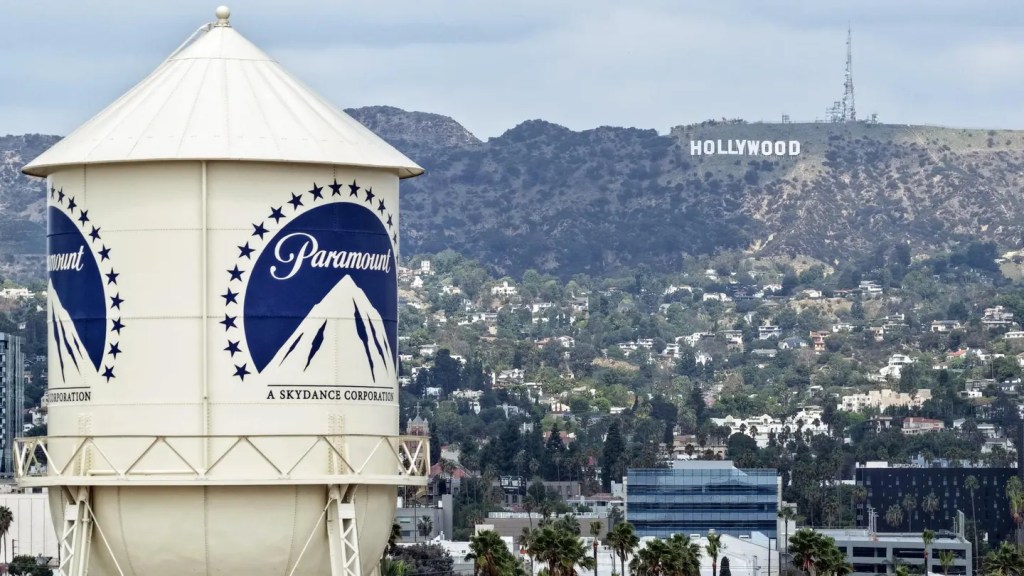
Paramount Skydance has cleared the last major hurdle standing between it and one of the biggest media mergers in Hollywood history, settling antitrust lawsuits from a dozen U.S. states and the Writers Guild of America over its $110 billion takeover of Warner Bros. Discovery. The agreement, announced in late September, is expected to let the deal close within about two weeks, ending months of legal uncertainty over a merger that would unite CBS, CNN, Warner Bros., HBO and Discovery under one roof.
The lawsuit, led by California Attorney General Rob Bonta and joined by eleven other states, had argued the combined company would reduce competition in theatrical film distribution and basic cable licensing, warning of “higher prices, fewer films and television shows, and harm to theaters and distributors.” A federal judge had issued a temporary restraining order blocking the deal, with a trial originally set for March 2027, while a quarterly “ticking fee” of roughly $650 million began accruing against Paramount for every quarter the merger stayed unclosed.
Under the settlement, Paramount has committed to releasing at least 30 wide theatrical films a year for its first two years as a combined company, rising to 32 a year for the following three, with at least 20 percent qualifying as blockbusters budgeted above $50 million and shown in 3,000 or more theaters. The company also pledged a minimum of $300 million in additional annual U.S. production spending — about $1.5 billion over five years — a $5 million yearly independent film fund, and a 45-day theatrical exclusivity window before titles move to streaming. Paramount faces a $30 million penalty for every film that falls short of the agreed quotas, and an independent monitor, overseen by a committee of five states, will enforce compliance.
The deal also addresses concerns about news independence, establishing a five-person editorial oversight board with three-year terms to monitor CNN and CBS News, alongside a five-year pause on CBS layoffs and a $17.5 million contribution to the Writers Guild’s health fund as part of a separate settlement with the union.
Paramount Skydance CEO David Ellison framed the settlement as proof the merger would strengthen, not shrink, American filmmaking. “We’re confident this agreement does exactly that, memorializing commitments that include 30+ films annually and expanded U.S. film production to help revitalize our industry here at home,” Ellison said. Bonta, who had opposed the merger outright before agreeing to the settlement, described the outcome as a win on competition grounds rather than a full victory. “This is a court-enforceable settlement that addresses concerns by providing more film production that protects Hollywood workers,” he said, adding that the deal delivers “more production, more choice, and guardrails that keep this industry competitive.”
Not everyone is satisfied. A coalition calling itself Block the Merger, which had pushed states to fight the acquisition outright, blasted the settlement as a capitulation. “This is a bad deal for the future of film, entertainment, independent journalism, and a strong democracy,” the group said in a statement.
With the states and the union now on board, Paramount Skydance is positioned to close on one of the largest entertainment deals in years, reshaping the ownership of CNN, CBS, HBO and two major film studios under a single corporate umbrella — a consolidation that will be watched closely across the industry, including by African content partners and distributors who license Warner Bros. and Discovery programming across the continent.
Sources: Associated Press, TheWrap, Cord Cutters News

Leave a comment