

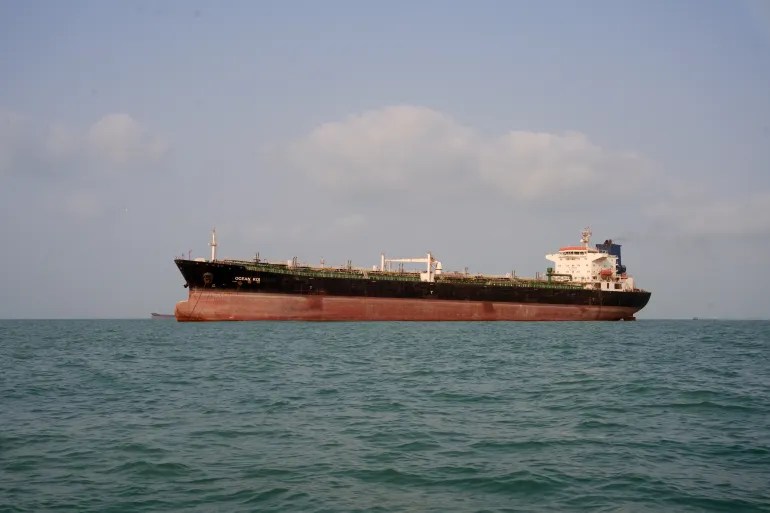
Oil shipments through the Strait of Hormuz have rebounded to near pre-war levels in recent weeks, even as attacks on tankers transiting the narrow waterway have intensified, raising fresh doubts about how long the fragile recovery can hold.
The strait, which handles roughly a fifth of the world’s crude and liquefied natural gas supplies, has been under threat since February 28, when the United States and Israel launched a war against Iran. Tehran responded by effectively shutting the passage, while Washington has maintained a blockade on Iranian ports. Since then, Gulf shipping has adapted through a patchwork of workarounds: pipeline diversions, ship-to-ship transfers outside the strait, and tankers that switch off their transponders to avoid detection.
According to data from the analytics firm Kpler, Gulf oil flows excluding Iran recovered to more than 81 percent of pre-war levels in September, with wider Middle East crude exports topping pre-war volumes on 14 separate days that month. Roughly 40 percent of exports now bypass the strait entirely, often moving instead through Saudi Arabia’s East-West pipeline to the Red Sea port of Yanbu.
But the recovery has come alongside a sharp rise in attacks. The UK Maritime Trade Operations agency has recorded at least one attack a day in the strait or the Gulf of Aden since October 2. Among the latest incidents, the Kuwaiti-flagged tanker MT Kazimah III was struck and caught fire on October 1, and the Liberian-flagged tanker Lipsi was hit on October 4, damaging its engine room. On Tuesday, 12 crew members aboard a Panama-flagged tanker were injured when an unknown projectile struck the vessel, India’s Ministry of Foreign Affairs said.
Oil prices have stayed elevated near $100 a barrel, up from about $72 before the war began, with Brent crude trading at $99.57 and West Texas Intermediate at $88.37 as of Tuesday. Last week, G7 nations announced plans to release up to 100 million barrels from strategic reserves, including diesel, to ease pressure on markets.
Analysts caution the current flows are more fragile than the headline numbers suggest. “Ships don’t get built overnight,” said Chris Beauchamp, an analyst at IG Group, describing the strain the shuttle-tanker system has placed on freight costs and vessel availability, which he called “the underlying mechanics of shipping.”
PVM analyst Tamas Varga said the workarounds “can be maintained as long as these routes stay secure,” but warned flows would become unsustainable “if attacks on ships, shipping lanes, or the pipeline resume” at scale. He added that a genuine return to pre-conflict conditions would require “a lasting peace deal between the US and Iran, followed by a permanent and unconditional reopening of the Strait.”
Saudi Aramco CEO Amin Nasser told an energy conference in London this week that nearly three billion barrels of global oil supply have been lost since the conflict began, and that rebuilding inventories could take up to two years even after Hormuz reopens. “The system is already straining,” he said.
The two sides dispute how much oil is actually moving. President Donald Trump has credited US forces with protecting shipping lanes and restoring flows, while Iran insists the volume passing through is “negligible” and maintains it still effectively controls the waterway.
Sources: Al Jazeera, CNBC




Leave a Reply