

Iran’s Foreign Minister, Abbas Araghchi, has declared that his country is fully prepared for hostilities with the United States to resume, warning that the confrontation could escalate into what he called a “doomsday war” if diplomacy fails.
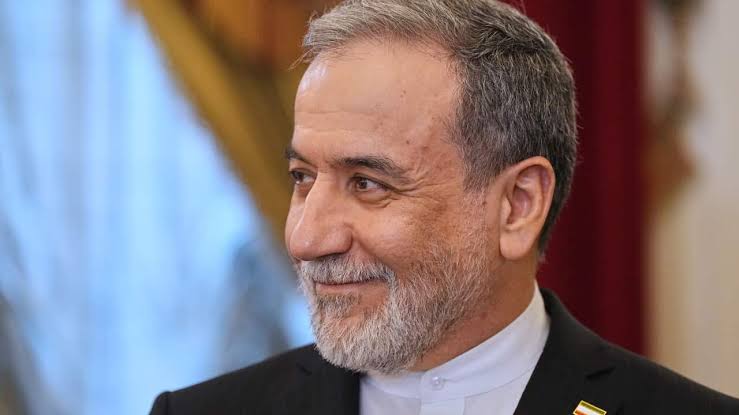
Speaking to NBC’s “Meet the Press” on Sunday, Araghchi struck a defiant tone, insisting that Tehran would not back down in the face of renewed military pressure. “We are fully prepared for the war to be resumed,” he said. “We stand firm in the face of any new aggression, even if it comes to a doomsday war.” The remark underscores how far apart Washington and Tehran remain, months after their last direct confrontation, and how quickly the situation could deteriorate if talks collapse entirely.
Despite the combative language, Araghchi left the door open for a negotiated settlement, making clear that the choice now rests with the American side. “At the same time, we stand ready for diplomacy,” he said. “It is up to President Trump to choose.” That framing puts the onus on Washington, even as Iran continues to project military readiness in public statements.
At the center of the current standoff is a proposal from Tehran to reopen the Strait of Hormuz, one of the world’s most critical oil shipping routes, within seven days. In exchange, Iran is seeking access to billions of dollars in frozen assets and permission to resume oil exports, conditions that echo a memorandum reportedly agreed to in June before renewed strikes caused the arrangement to fall apart.
President Trump has already rejected that offer publicly, but according to Araghchi, the rejection has not yet been communicated formally through the intermediaries handling the indirect talks, including Qatar. That distinction matters diplomatically: as long as no official message has passed through the mediators, Tehran appears to be treating the door to negotiation as still technically open, even if the public signals from Washington suggest otherwise.
The American side has shown little appetite for Iran’s terms. U.S. Ambassador Mike Waltz dismissed the proposal as “cynical,” arguing that releasing billions of dollars in frozen funds to Iran was not something Washington was prepared to accept as part of any deal.
For his part, Araghchi maintained that Iran is approaching the crisis with a long view, rather than reacting to the domestic political calendar in the United States. “I am still trying diplomacy because I think we shouldn’t miss any chance for peace,” he said, adding that Iran’s decisions are guided by its own national interests rather than the timing of U.S. elections.
The exchange highlights the fragile and contradictory state of U.S.-Iran relations at the moment: both sides are publicly signaling strength and readiness for conflict, while simultaneously insisting, at least rhetorically, that they have not shut the door on talks. Whether that ambiguity holds or gives way to renewed confrontation may depend on what happens next through the back-channel diplomacy both sides say they are still pursuing.
Sources: CNBC, NBC Washington.




Leave a comment